

The Global Tech Wave Is Reshaping Careers
Artificial intelligence is redrafting the job descriptions overnight. The cloud computing environment is being established as the backbone of any business. Cyberattacks have made news from Kathmandu to Silicon Valley, and now companies are looking for engineers who can design secure and intelligent systems.
This is not a future prediction. It is happening right now.
If technology is in your future career plans, knowing how these trends are affecting the industry and choosing the right major and educational environment are crucial.
Today, the key issue isn’t only about what to study but also where and how to do that so that you are already in the industry as a student.
Why Future-Ready Tech Skills Matter Now
The Tech Industry Is Moving Faster Than Traditional Education
The fast growth of artificial intelligence, the use of cloud computing services and the implementation of cybersecurity systems have brought significant transformations in employment requirements.

A lot of employers in almost all industries are looking for workers who are able to solve real problems with the help of intelligent automation systems, make sense of huge amounts of data, ensure the safety of digital infrastructures against new threats, and develop applications that can be easily scaled.
These demands are reflected in expanding technology opportunities and competitive salary benchmarks both in Nepal and globally.
Memorising theories is not sufficient anymore.
It is essential that students graduate with hands-on experience along with a portfolio to show that they know how to apply their learning.

Degrees Built for a Tech-Driven World
Choose a Degree That Moves With the Industry
As technology becomes central to business strategy, technology education must evolve alongside it.
BSc (Hons) in Computer Science and BSc (Hons) in Cybersecurity help students learn about programming and system design and familiarise themselves with the technologies being used for intelligent, secure, and cloud computing systems.
Fishtail Mountain College, situated at Mustang Chowk, Pokhara, offers these degree programmes through its collaboration with the University of Wolverhampton, United Kingdom.
The collaboration enables students to get the degree from a UK university while studying in Nepal.
What Should a Future-Ready Computer Science Degree Cover?
A comprehensive Computer Science course should include courses on:
- Programming & problem-solving
- Object-Oriented Design and Full Stack Development
- Internet software architecture and databases
- Artificial intelligence concepts and technologies
- Cloud systems and infrastructure
- Algorithms, concurrency, and computational mathematics
- Artificial Intelligence and Machine Learning
- Intelligent Systems and Big Data Analytics
- Professional Practice and Collaborative Software Development
The goal is to balance academic depth with practical application, allowing students to graduate with knowledge they can actually use and a portfolio that demonstrates what they can do.
The Skills Employers Are Looking For
Technical Skills Are Only Half the Equation
Graduates who thrive in a technology-first market combine technical expertise with professional adaptability.
Employers increasingly value:
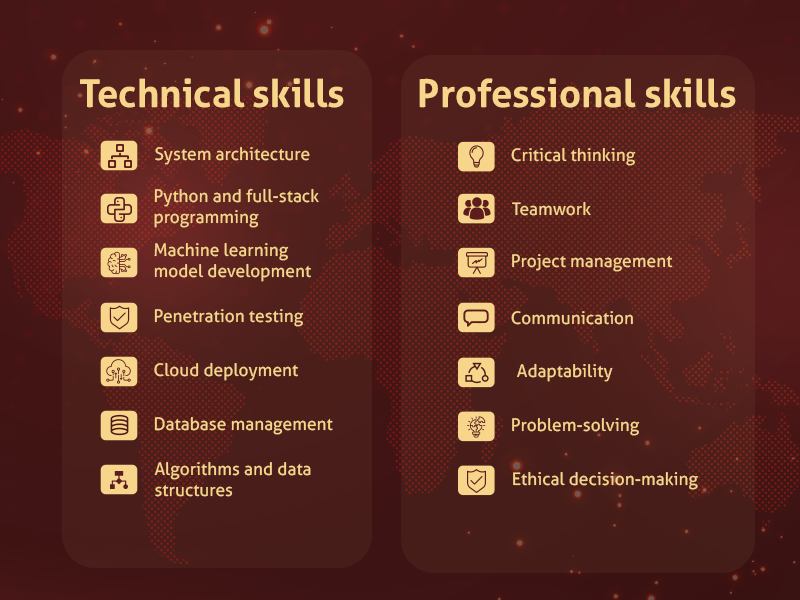
These transferable skills allow graduates to transition between different roles and industries as technology advances.
Professional prospects have diversified to include more than just the standard engineering career choices. There is a growing demand in the integration of technology, business, data, cybersecurity, and product innovation.
A Tech Ecosystem Connected to Industry
Why Classroom Learning Alone Isn't Enough
Being linked to a growing technology ecosystem can give a college something that a classroom can never offer: exposure to a production environment and real-life experience.
Fishtail Mountain College is connected to the Innovate Nepal Group (ING) technology ecosystem, offering more connections for its students to technology firms, professionals, and digital products.
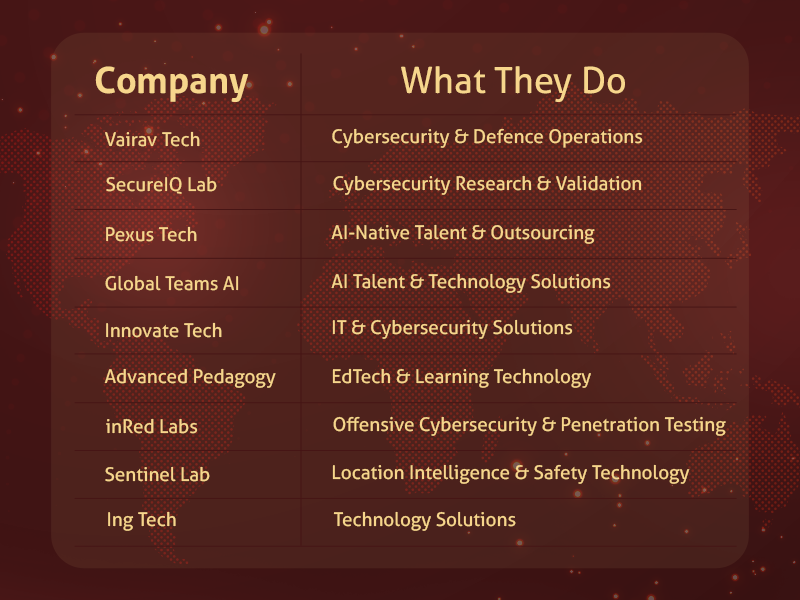
Meet the Companies Powering the Ecosystem
The ING ecosystem includes:
What Does Industry Exposure Mean for Students?
Being connected to an active technology ecosystem can give students opportunities to:
- Gain internships with engineering teams.
- Work on practical technology projects.
- Build and test solutions using real-world scenarios.
- Learn from professionals actively working in technology.
- Explore potential employment pathways.
- Develop exposure to AI, cloud computing, and cybersecurity environments.
The ability to build, test, improve, and deploy technology provides a valuable bridge between academic learning and professional expectations.
From Classroom Projects to Industry Experience
Build Your Portfolio Before You Build Your Career
The most effective technology programmes emphasise learning by doing. At the best IT college in Pokhara, students should have opportunities to gain practical experience through:
- Industry-style capstone projects and showcases
- Internships within the wider technology ecosystem
- Hackathons and coding competitions
- Technology showcases and project demonstrations
- Group-based software development
- Client presentations
- Real-world datasets
- Practical deployment experience
- Portfolio development from the early stages of the degree
Graduates who enter the job market with strong project portfolios and practical experience can demonstrate their capabilities beyond what appears on a transcript.
Why Employers Value Ecosystem-Ready Graduates
Skills That Help You Contribute From Day One
Businesses need professionals who can analyse information, automate processes, secure systems, and drive innovation.
Graduates who gain exposure to active technology ecosystems can develop advantages such as:
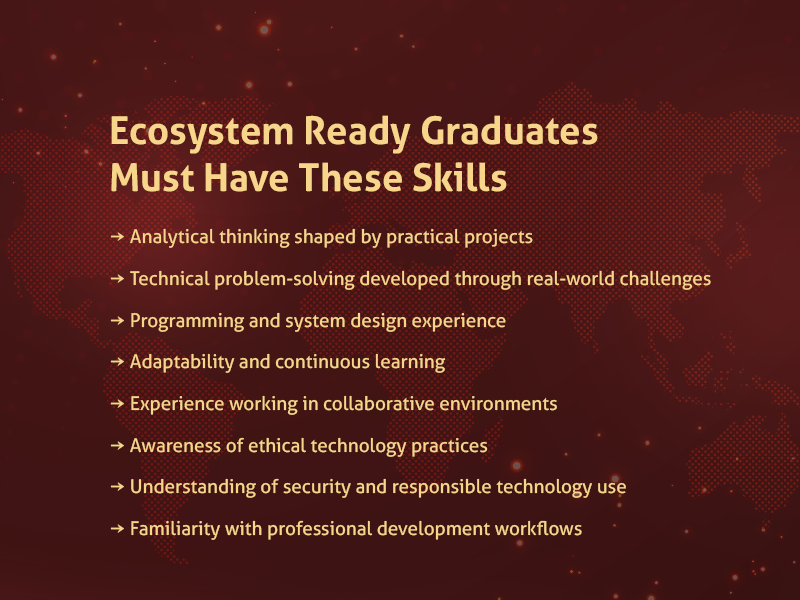
These qualities can help graduates contribute to organisations while continuing to grow alongside rapidly changing technology.
Choosing a Degree for Long-Term Growth
Don't Choose Only for Today's Jobs; Prepare for Tomorrow's Technology
Selecting the right programme is one of the most important educational decisions you will make.
Instead of choosing a degree based only on today's popular technologies, look for an education that provides:
- Strong academic foundations
- Practical technical training
- Globally recognised qualifications
- Industry exposure
- Emerging technology knowledge
- Career development opportunities
- Opportunities to build a professional portfolio
The BSc (Hons) Computer Science and BSc (Hons) Cybersecurity courses offered at Fishtail Mountain College aim to equip learners with skills that will help them cope in a rapidly changing technological environment.
Students have the opportunity to gain knowledge in various fields including programming, software engineering, data science, cloud computing, artificial intelligence, machine learning, and cybersecurity, with a UK university education and access to ING’s global technological network.
Scholarships That Reward Performance
FMC also offers scholarships via the AAA (Academic, Attitude, and Attendance) Scholarship.
This scholarship offers a full waiver of tuition fees for the top 10% of students, who have demonstrated excellent academic standing, good attitude, and regular attendance.
For high-performing graduates, there is an opportunity for scholarships for the Master’s Degree programme at ING colleges.
Conclusion
Fishtail Mountain College gives students something more than just a degree in technology. Through UK university courses, practical learning opportunities, and ties with the ING technology network, FMC ensures that students gain skills related to the emerging technology industry. Be it Computer Science, Cybersecurity, or anything else like AI, cloud computing, and software development, students will be able to gain practical skills in this field, through the programs offered at FMC, Pokhara.
For those who aim for a career in technology, FMC offers a chance for them to merge classroom learning with industry experience.